About Benjamin Dives
Since that morning in January 2022, I've maintained some form of daily conversation with Death. Not perfectly. Not every single day. But consistently enough to know it works.
I ask him what the best choices are if I want to live a little longer. Should I eat this croissant (the answer is normally no). Should I spend time with this person as I might not see them again. Should I have this difficult conversation now or wait.
This isn't meditation, though I sometimes use meditative states to access it. It's not visualisation, though there's a visual, auditory and kinesthetic component to establishing Death as a presence. It's an actual conversation with Death as an advisor who won't let me lie to myself.
What The Practice Has Done
This daily dialogue has helped me:
- Navigate major decisions with more clarity (when I choose to listen to him)
- Distinguish what I actually value from what I was performing for others
- Have difficult conversations with people I'd been avoiding for years
- Stop carrying expectations that were never mine to begin with
- Transform abject terror into something functional I could work with
- Live more truthfully, even when it's uncomfortable
I can tell you what it's done for me and 98% of the others I've taught. But I can't promise it'll do the same for you.
What This Looks Like
Theory is easy. Practice is harder. Here's an excerpt from 1 January 2022, the first time I used this process. I'm working with Death as an advisor to speak with my parts. This is what the process looks like with self-facilitation:
This isn't theory. This is what I actually do when I practice. It's messy. That's the point.
The Training
I'm studying a Master's in clinical PsychoNeuroImmunology at the Pruimboom Institute, which focuses on the fact that the communication between our psychology and our immune system is much more complex than believed. I have training in various psychological frameworks that inform this work, though I don't lead with credentials because they're not why this practice works.
I didn't develop this from theory. I developed it from desperation, from refusing to perform positivity anymore, from needing something that actually worked instead of something that just sounded good.
This works because it's honest. Death doesn't have an agenda. When you stop trying to fight mortality and start speaking directly with it, something in you shifts. It has to.
Why This Is Spiritual Work
This is spiritual work. Not religious. Not New Age. Spiritual in a specific sense: the developed capacity to tolerate anxiety without discharging it, sit with ambiguity without resolving it, and hold ambivalence without collapsing into one side.
Jungian analyst James Hollis calls these the "Three A's"—anxiety, ambiguity, and ambivalence. He argues that psychological maturity is measured by our capacity to tolerate them, not resolve them. When you face Death, all three are present: the anxiety of mortality, the ambiguity of not knowing when or how, the ambivalence of wanting to live while accepting you'll die.
Most approaches try to escape these. Emotion discharges anxiety temporarily—you cry, feel better, then it returns. Logic tries to resolve ambiguity—you understand, have a framework, but uncertainty remains. Urgency cuts through ambivalence—you just act, but the inner conflict isn't integrated.
Spirituality is what allows you to be with all three. The felt sense of something larger than ego that can hold paradox without collapsing into terror or performance. The part of you that can talk to Death without needing Death to be your friend or your enemy.
Why does this matter? Because emotion fades. Logic fails. Urgency passes. The spiritual relationship with Death persists. It's what makes transformation last beyond the initial intensive, beyond the emotional breakthroughs, beyond the intellectual understanding.
Death becomes a presence you can call on. A relationship you can trust. The ground you can stand on when everything else shifts. That's spiritual—not because it's mystical, but because it's reliable.
The real authority comes from the daily practice, from using this in the messy reality of living with brain cancer and five kids and three stepchildren and a wife and all the complexity that comes with actually being human.
What I Teach
I teach this framework to people facing serious illness (particularly cancer patients) who are exhausted by inspirational advice and ready to try something different. Sometimes they're dying. Sometimes they're just tired of pretending. Either way, they're done with performance. Such a waste of time, when you could be enjoying the sensations around you of simply being alive.
The work happens in three-week intensive cohorts. You're placed in a pod of four people. Three others going through the same three weeks at the same time. That pod structure is where the real transformation happens. Not in lessons from me, but in witnessing each other's processes, supporting each other through disassembly, integration and rebuild, and forming bonds that typically last well beyond the programme.
I don't know if this will work for you. It's worked for me and most of the others I've taught who keep up the practice. Once you've done it once it becomes easier to ask Death what they think. About everything, from what to eat ("Do I eat this cookie, Death?") to whether to speak to a person when it doesn't seem like a good idea. I don't always listen to his suggestions.
What I can promise: I'll be honest about whether I think this work will serve you. I've turned people away before. Not because they weren't good people or didn't have serious diagnoses, but because they weren't ready for this specific approach. Some needed therapy first. Some were looking for comfort, not clarity. Some wanted a guru, and I'm not that.
If I don't think you're ready, I'll tell you that directly. And I'll usually suggest what I think you need instead. A therapist, a grief counsellor, time to process, whatever seems most useful.
Personal
I met my wife Zarina in March 2022. Two months after discovering this practice. A package was misdelivered to my house (she used to live there). That accidental meeting changed everything. I have three children from a previous relationship. Zarina has three from her first marriage. Together we now have two more. So I'm a father of 8. That's a lot of little people to disappoint when I die. We live in Sheffield. I drink too much decaf coffee. I read obsessively. I'm terrible at small talk. I think most motivational content is toxic.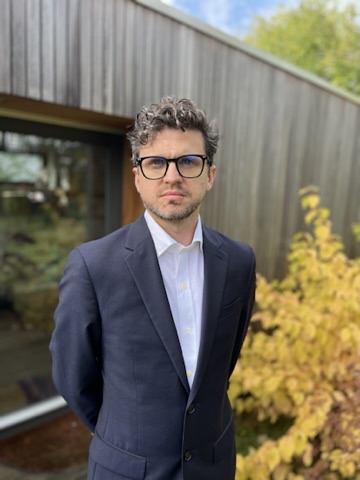
For my broader work in clinical Psycho-Neuro-Immunology (cPNI), research, and writing, visit benjamindives.com.
This work is direct, evidence-informed where possible, experiential and sometimes uncomfortable. If you want comfort, you can find plenty of it online. If you want clarity (even uncomfortable clarity) you're in the right place.